
Dump Truck Hydraulic Maintenance Guide for Heavy-Duty Operations
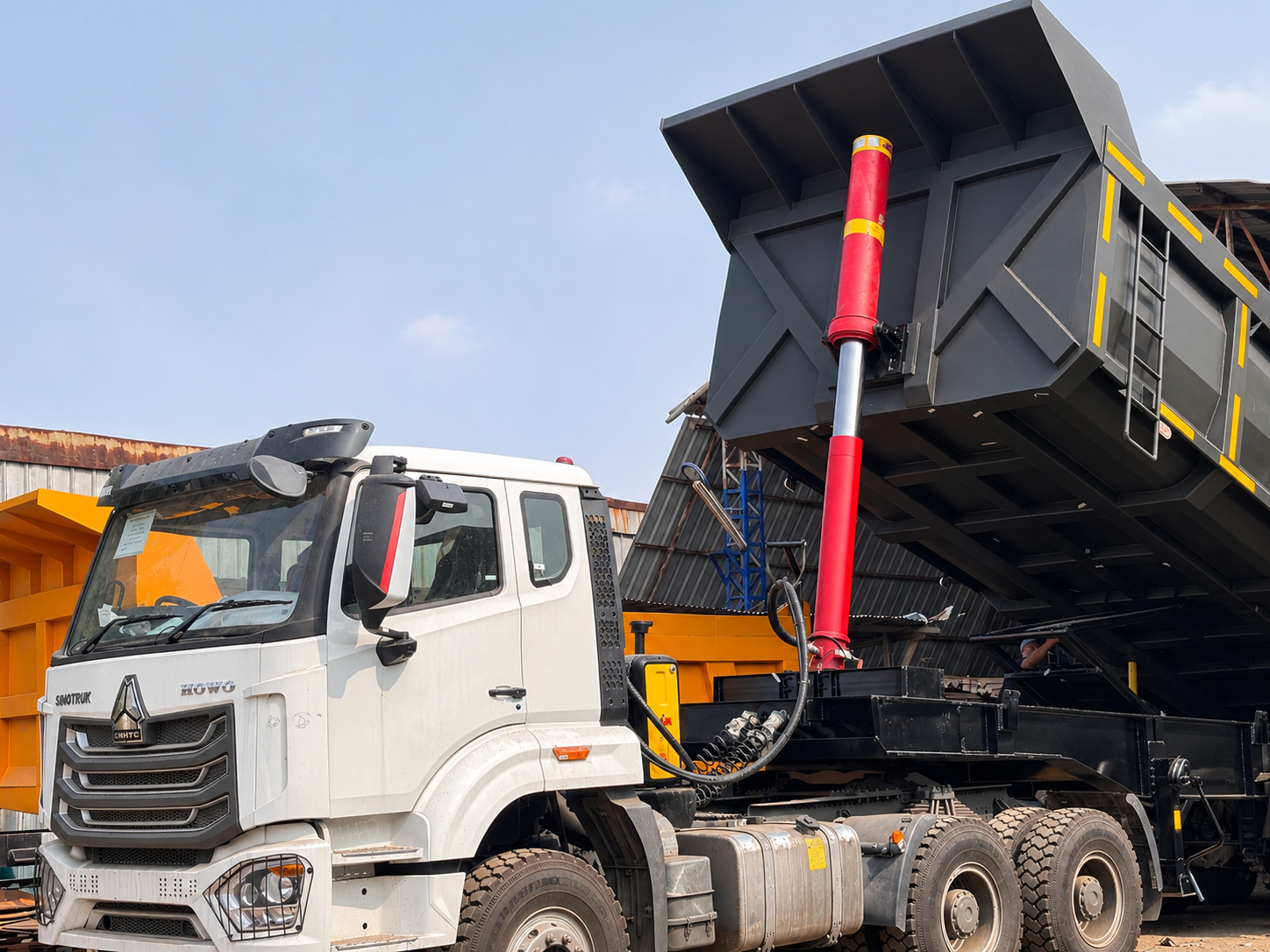
Understanding the Role of a Dump Truck Hydraulic System
A dump truck hydraulic system uses pressurized fluid to generate the force required to move the hydraulic cylinder. This movement raises and lowers the dump body during loading and unloading operations.
System performance depends on the condition of its hydraulic components, oil quality and level, as well as the proper operation of its controls and safety mechanisms. A problem in one component may affect the lifting function and disrupt daily operations.
Routine inspections help identify early signs of damage before they develop into more serious operational issues.
1. Check for Hydraulic System Leaks
Hydraulic oil leaks are among the first conditions that should be investigated. Inspect the hoses, connections, fittings, cylinders, and other areas through which hydraulic oil flows.
Look for oil stains, wet surfaces, or fluid dripping around the components. If a leak is detected, investigate its source before returning the unit to operation.
Even a minor leak should not be ignored. Oil loss can affect system performance and may require further inspection of related components.
2. Inspect Hydraulic Hose Conditions
Hydraulic hoses transfer pressurized oil to the components that require it. Their condition should be visually inspected to identify damage that could interfere with fluid flow.
Look for the following signs:
-
Cracks or surface damage.
-
Bulging or deformation.
-
Kinks or pinched sections.
-
Abrasion caused by contact with the chassis or other components.
-
Leakage along the hose or around its connections.
Damaged hoses should be evaluated by qualified technicians. Replacement hoses must meet the specifications required by the unit's hydraulic system.
3. Inspect the Hydraulic Cylinder
The hydraulic cylinder converts fluid pressure into mechanical movement to raise or lower the dump body. Its condition directly affects the lifting mechanism.
A visual inspection may include:
-
The condition of the piston rod surface.
-
Scratches, corrosion, or physical damage.
-
Leakage around seals and cylinder components.
-
Cylinder mounting points and connections.
-
Abnormal movement when raising or lowering the dump body.
If leakage, piston rod damage, or unusual movement is detected, have the unit inspected by qualified technicians before further operation.
4. Check Hydraulic Connections and Fittings
Connections and fittings link the hydraulic lines throughout the system. They should be inspected for leaks, physical damage, and improper connection conditions.
Check hose connections, fittings, connectors, and connection points leading to the cylinder and other hydraulic components.
Do not tighten connections arbitrarily. Follow the manufacturer's procedures and torque specifications to avoid damaging threads, fittings, or related components.
5. Check Hydraulic Oil Level and Condition
Hydraulic oil transfers power throughout the system. Its level and condition must be maintained according to the manufacturer's requirements.
During inspection, pay attention to:
-
Oil level according to the unit's indicator and manual.
-
Visible oil condition.
-
Signs of contamination or unusual changes.
-
Leaks that may cause the oil level to decrease.
-
The type and specification of hydraulic oil being used.
Always use oil that meets the manufacturer's recommendations. Do not mix or change oil types without confirming their compatibility with the hydraulic system.
Oil level checks and refilling must follow the unit's manual because dump body position and system conditions may affect inspection results.
6. Inspect Safety Mechanisms
In addition to the operating components, safety mechanisms should be included in routine maintenance inspections. These components help protect operators and personnel working around the dump truck.
Ensure that the safety devices specified for the unit's design are available and in proper condition. Check the function of the body lock or support mechanism according to the manufacturer's procedures.
Never work beneath a raised dump body supported only by hydraulic pressure. Use an appropriate mechanical support and follow the required safety procedures before inspection or repair.
7. Establish a Maintenance and Inspection Schedule
Daily inspections and scheduled maintenance help maintenance teams monitor hydraulic system conditions. The maintenance schedule should follow manufacturer recommendations, operating hours, and the unit's workload.
As a maintenance management reference, inspections can be organized into several activities:
-
Pre-operation inspections.
-
Visual inspections during operations, where required by procedure.
-
Scheduled inspections based on operating hours or the manufacturer's service intervals.
-
Further inspections when abnormal conditions are detected.
-
Recording inspection results and corrective actions.
Service intervals should not be based solely on estimates. Use the unit's manual as the primary reference and organize the maintenance schedule according to actual operating conditions.
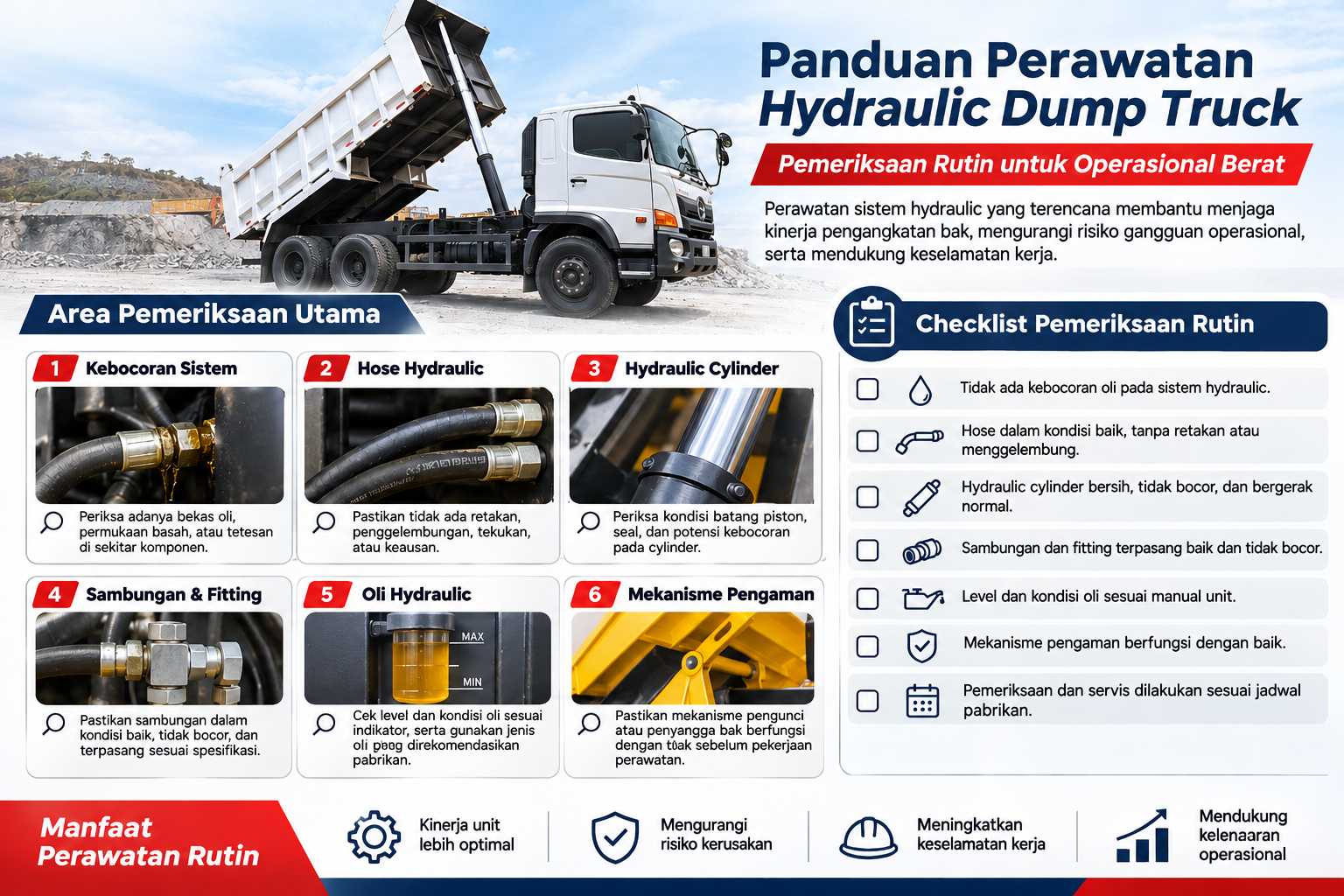
Dump Truck Hydraulic Inspection Checklist
The following table provides a general reference for routine inspections by operators and maintenance teams.
| Component | Inspection Point | Follow-up Action |
|---|---|---|
| Hydraulic system | Signs of oil leakage | Identify the source of the leak |
| Hoses | Cracks, bulging, kinks, or abrasion | Evaluate and replace when necessary |
| Cylinder | Piston rod condition and leakage | Arrange technician inspection |
| Connections and fittings | Physical condition and leakage | Repair according to specifications |
| Hydraulic oil | Oil level and condition | Follow the unit's manual |
| Safety mechanisms | Condition and function | Inspect before maintenance work |
| Service schedule | Inspection history and operating hours | Update maintenance records |
This checklist is a general inspection reference. Detailed inspection procedures and acceptance criteria must follow the manual and hydraulic system design of each unit.
Why Dump Truck Hydraulic Maintenance Matters
Hydraulic maintenance is not limited to keeping the dump body lifting mechanism functional. Planned inspections also help companies identify potential issues early and organize corrective actions more effectively.
Routine maintenance can support several operational objectives:
-
Identifying leaks and component damage at an early stage.
-
Supporting equipment readiness before operation.
-
Reducing the risk of operational interruptions caused by undetected problems.
-
Helping maintenance teams prioritize corrective work.
-
Maintaining equipment condition records for future maintenance evaluations.
Maintenance results still depend on inspection accuracy, technician competency, the availability of suitable components, and compliance with manufacturer procedures.
Conclusion
Dump truck hydraulic maintenance requires regular attention to hoses, cylinders, connections, hydraulic oil, leaks, and safety mechanisms. Inspection records should be maintained so that changes in equipment condition can be monitored and addressed.
At PT SIS, we understand that the hydraulic system is an important part of dump truck functionality. Planned inspections and maintenance in accordance with manufacturer recommendations can help companies maintain equipment readiness for demanding operations.
Planning to procure a dump truck or looking for a body fabrication solution for your material transportation operations?
Contact PT Sribaru Indah Sejahtera to discuss your equipment requirements and suitable specifications.
WhatsApp: 0823-1262-3763
Recent Posts