
Understanding Steel Plate Types, Thickness, and Their Applications in Truck Body Manufacturing
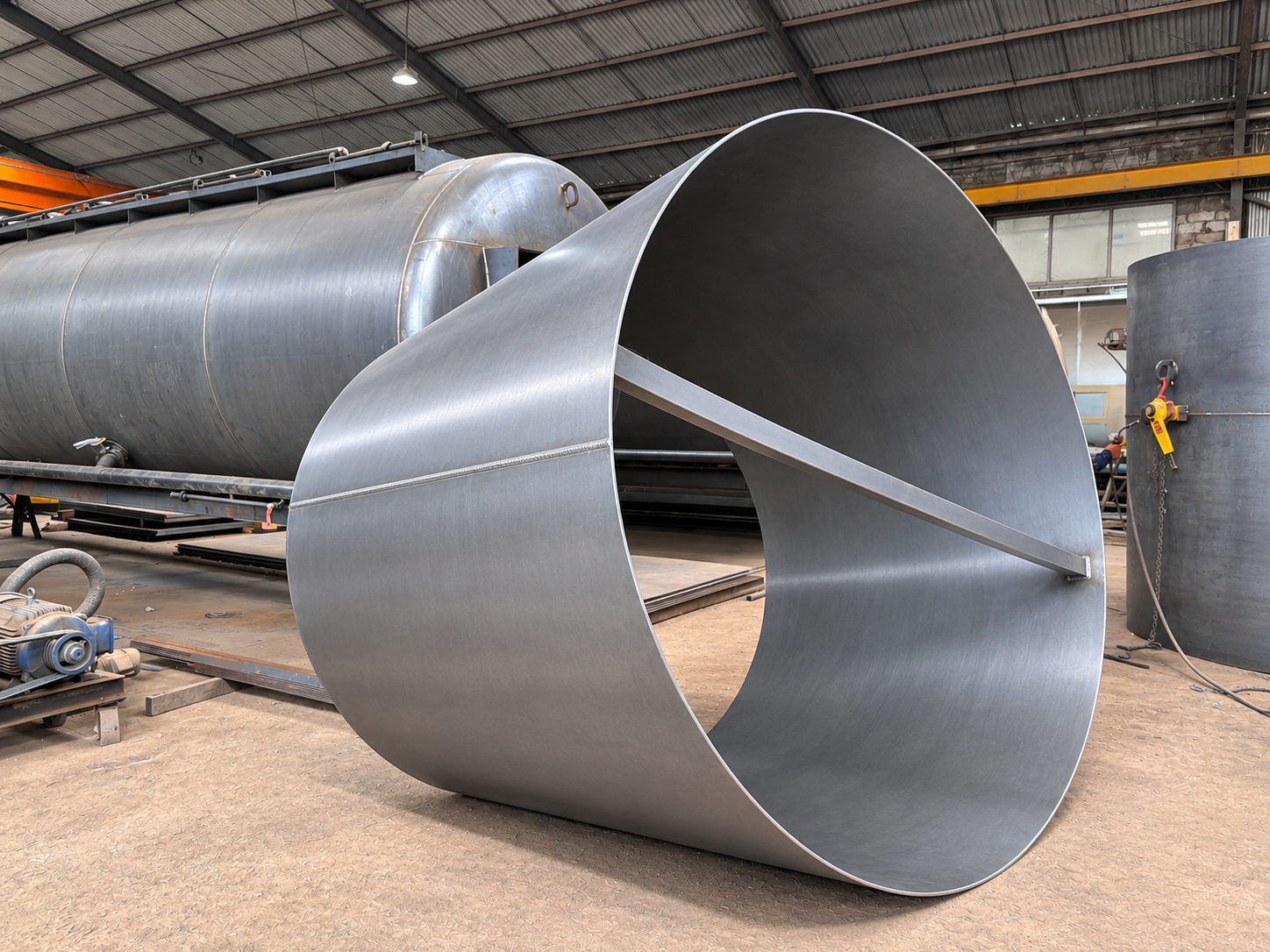
Why Is Steel Plate Selection Important in Truck Body Manufacturing?
Steel plate is more than just a material used to form a vehicle body. It is part of a structure that must perform according to the intended application.
In a dump truck, for example, the body floor is directly exposed to loaded materials that may cause abrasion and impact. A tank, on the other hand, requires different considerations because its design may involve fluid characteristics, internal pressure or vacuum conditions, corrosion, and safety requirements.
Incorrect material or thickness selection may result in an unnecessarily heavy structure, unsuitable operating performance, or insufficient durability.
Steel plate selection should therefore consider several factors:
-
Vehicle type and intended function.
-
Type of material or cargo being transported.
-
Load and operating conditions.
-
Resistance to abrasion, impact, or corrosion.
-
Structural shape and reinforcement system.
-
Vehicle weight and chassis capacity limits.
1. Common Steel Plate Types Used in Truck Body Manufacturing
Different steel plate types have different characteristics. The following materials are commonly encountered in vehicle construction and industrial fabrication.
A. Mild Steel (Low-Carbon Steel)
Mild steel is a low-carbon steel widely used in general fabrication. It is known for its formability and weldability when processed using appropriate procedures.These characteristics make it suitable for various truck body components that require cutting, forming, and joining.
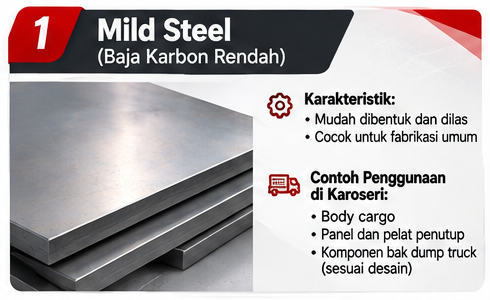
Typical applications include:
-
Vehicle body structures.
-
Cargo body components.
-
Panels and covers.
-
Structurally designed support components.
-
Selected dump truck body components, depending on the design.
Mild steel can be a practical choice for general fabrication. However, its mechanical properties and abrasion resistance still need to be evaluated based on the actual steel grade.
B. High Tensile Steel
High tensile steel refers to a group of steel grades designed to provide higher mechanical strength than conventional structural steel under specified conditions.
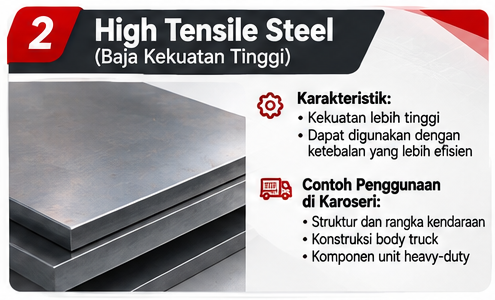
It may be considered when a design requires a structure capable of carrying loads while managing overall structural weight. With appropriate material selection, engineers can evaluate opportunities to optimize thickness without compromising required strength.
Typical applications include:
-
Vehicle structural components.
-
Truck body structures.
-
Components in material transport equipment.
-
Selected heavy-duty vehicle structures.
The term high tensile does not refer to a single material specification. Grade, yield strength, tensile strength, weldability, and forming requirements must be checked before selecting the material.
C. Wear Resistant Steel
Wear resistant steel is designed to provide resistance to surface wear caused by abrasion. It is commonly used in equipment and vehicles exposed to abrasive materials.In truck body manufacturing, this material is relevant for areas repeatedly exposed to sand, rocks, soil, minerals, or other materials that may wear down steel surfaces.
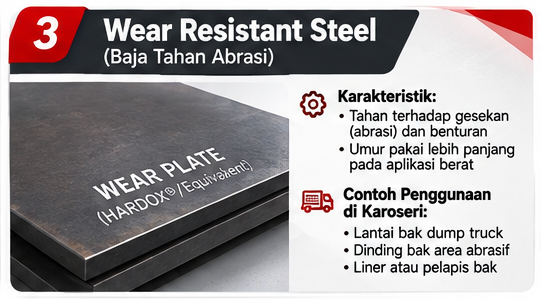
Typical applications include:
-
Dump truck body floors.
-
Selected body wall areas exposed to high abrasion.
-
Internal body liners.
-
Material handling equipment components.
One recognized material family in this category includes wear plates with specific hardness levels, such as Hardox and comparable products. However, material selection should not rely solely on hardness values. Formability, weldability, and structural requirements must also be considered.
D. Stainless Steel
Stainless steel is an alloy steel that obtains corrosion resistance through chromium content and other alloying elements.It may be suitable for applications requiring corrosion resistance or specific cleanliness requirements.
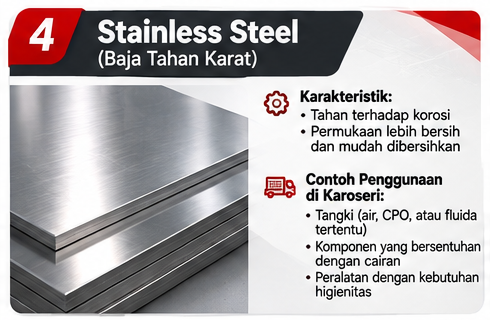
Examples of truck body applications include:
-
Selected tank applications.
-
Components in contact with compatible fluids.
-
Industrial equipment requiring corrosion resistance.
-
Components with specific surface requirements.
Stainless steel grades such as SS304 and SS316 have different properties. Selection should consider fluid type, concentration, temperature, operating environment, and cleaning requirements.
E. Galvanized Steel
Galvanized steel is steel coated with zinc to help protect its surface against corrosion.
The zinc coating provides protection in environments that may cause rust. This material may be used for selected panels and vehicle components that require additional surface protection.
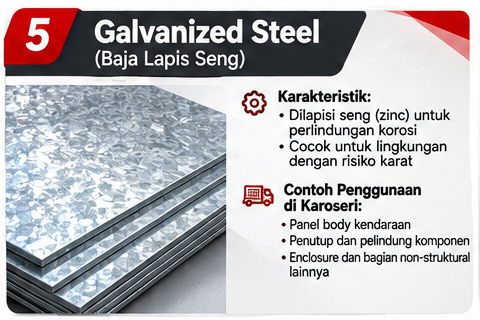
Typical applications include:
-
Selected body panels.
-
Covers and protective components.
-
Enclosures.
-
Vehicle support components, depending on the design.
Galvanized steel is not completely immune to corrosion. Cut edges, drilled areas, welded joints, and damaged coatings may require appropriate protective treatment.
2. Understanding Steel Plate Thickness and Its Functions
Steel plate thickness is generally measured in millimeters (mm). For the same steel type and surface area, greater thickness results in greater material mass.
However, thicker plates are not automatically the best choice. Thickness should be selected based on component function, material properties, structural design, and expected loading conditions.
The following table provides an illustrative overview of thickness ranges found in selected fabrication and truck body applications.
| Thickness | General Application |
|---|---|
| 1–2 mm | Selected non-primary structural panels and covers |
| 2–3 mm | Body panels and light components, depending on design |
| 3–4 mm | Body components requiring greater stiffness |
| 4–6 mm | Vehicle structures and selected body components |
| 6–8 mm | Body sections requiring greater strength or wear resistance |
| 8–10 mm | Structural applications with higher load or abrasion demands |
| Above 10 mm | Specialized applications requiring engineering evaluation |
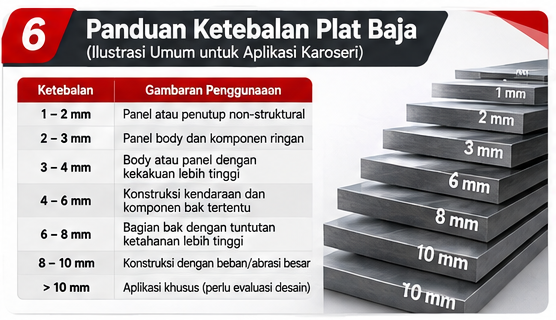
These ranges are general illustrations, not universal specifications for every vehicle. Actual requirements may vary according to material grade, design, capacity, and operating conditions.
3. Steel Plate Applications in Different Truck Body Units
After understanding the material types and thickness considerations, the next question is: which steel plate should be used for each vehicle?
The answer depends on the function of each unit.
A. Dump Trucks
Dump trucks have different material requirements throughout their body structure. The body must be designed to carry and discharge materials according to operational requirements.
Important components include:
| Component | Material Considerations | Function |
|---|---|---|
| Body floor | Structural steel or wear resistant steel | Supports loads and material abrasion |
| Side walls | Structural or high tensile steel, depending on design | Forms the cargo space and resists lateral loading |
| Front wall | Structural steel according to design | Defines the front of the cargo space and withstands operating loads |
| Tailgate | Steel selected for the required structure | Controls the rear opening of the cargo body |
| Reinforcement structure | Structural sections or steel profiles | Maintains stiffness and distributes loads |
As an example, a truck body catalog from an overseas manufacturer shows floor plate options of approximately 6–10 mm and side wall options of around 5–8 mm for selected configurations. Actual choices still depend on material grade, capacity, and body design.
For dump trucks transporting abrasive materials such as rocks or minerals, wear resistant steel may be considered for areas exposed to repeated abrasion.
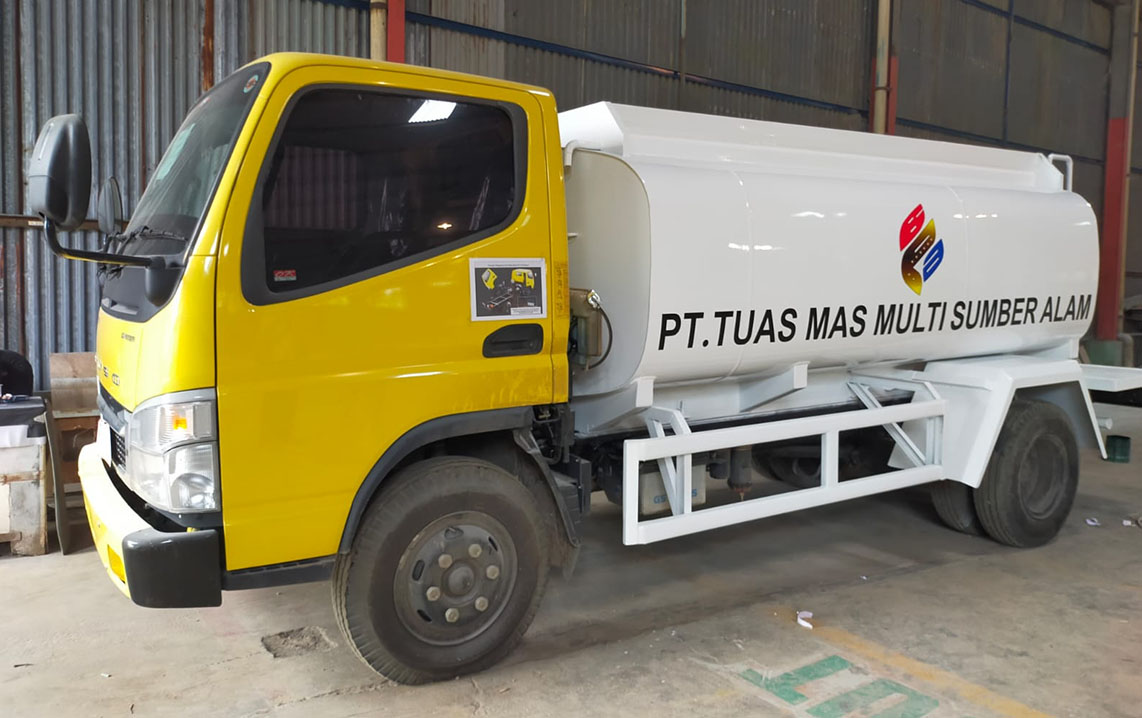
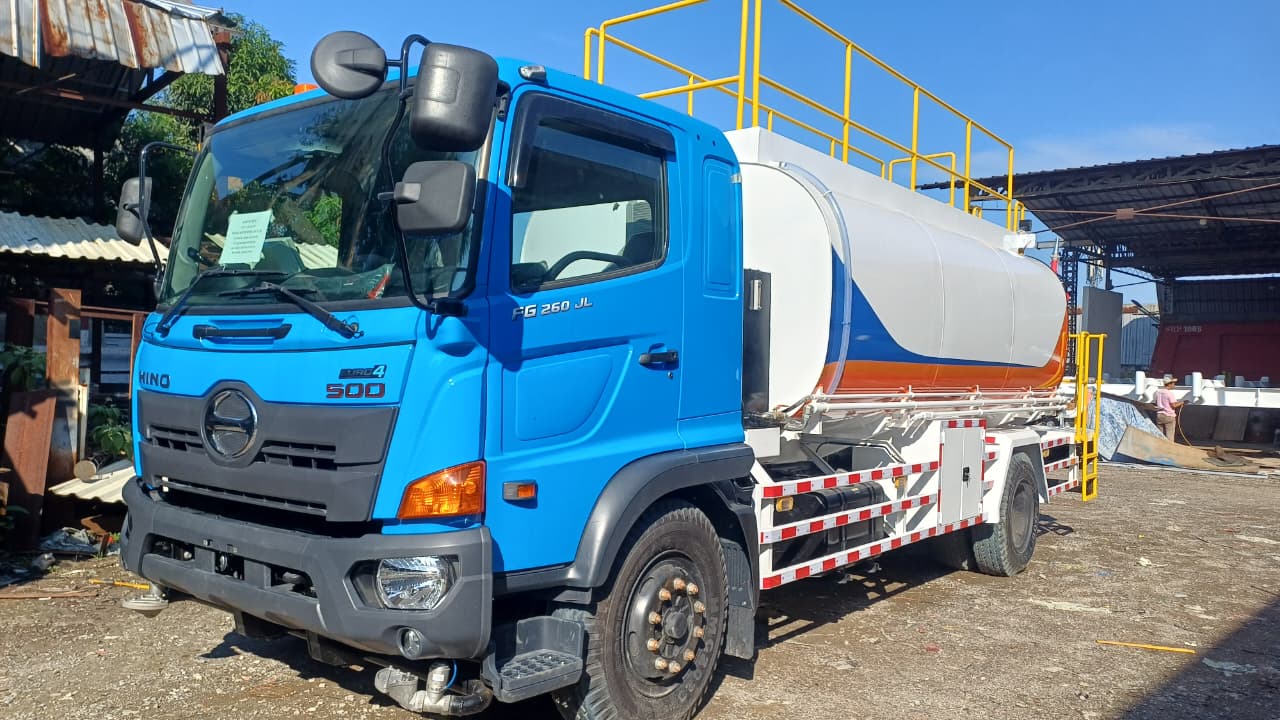
B. Water Tanks
Water tanks are designed to store and distribute water for operational purposes. Unlike dump trucks, tank construction requires consideration of the shell geometry, fluid load, support system, and operating environment.
Material selection should consider:
-
Type of water or fluid being transported.
-
Tank capacity and dimensions.
-
Shell shape and construction.
-
Reinforcement and support system.
-
Dynamic loading during vehicle movement.
-
Corrosion protection requirements.
Material type and thickness cannot be determined by tank capacity alone. Design calculations need to consider hydrostatic pressure, tank geometry, operating conditions, and applicable safety requirements.
C. CPO Tanks
CPO tanks are used to store and transport crude palm oil.
Material selection should consider fluid characteristics, operating temperature, cleanliness requirements, and corrosion protection.
The selected material must be compatible with the transported product and the intended tank design. Thickness selection also needs to consider tank dimensions, construction, reinforcement, and operating conditions. For this reason, not every CPO tank should automatically use the same steel type and thickness.
D. Vacuum Trucks
Vacuum trucks use a vacuum system to suction and transport liquid waste or other materials according to their intended application.
Unlike conventional storage tanks, vacuum tanks must be designed to withstand pressure differences between their internal and external environments.
Important design considerations include:
-
Design vacuum pressure.
-
Tank diameter and length.
-
Shell and head geometry.
-
Material and plate thickness.
-
Reinforcement or stiffeners.
-
Joint and welding quality.
-
Pressure safety and protection systems.
Vacuum tank thickness must be determined through engineering calculations and applicable design standards. A thicker plate alone does not guarantee safety if the geometry and reinforcement system are inadequate.
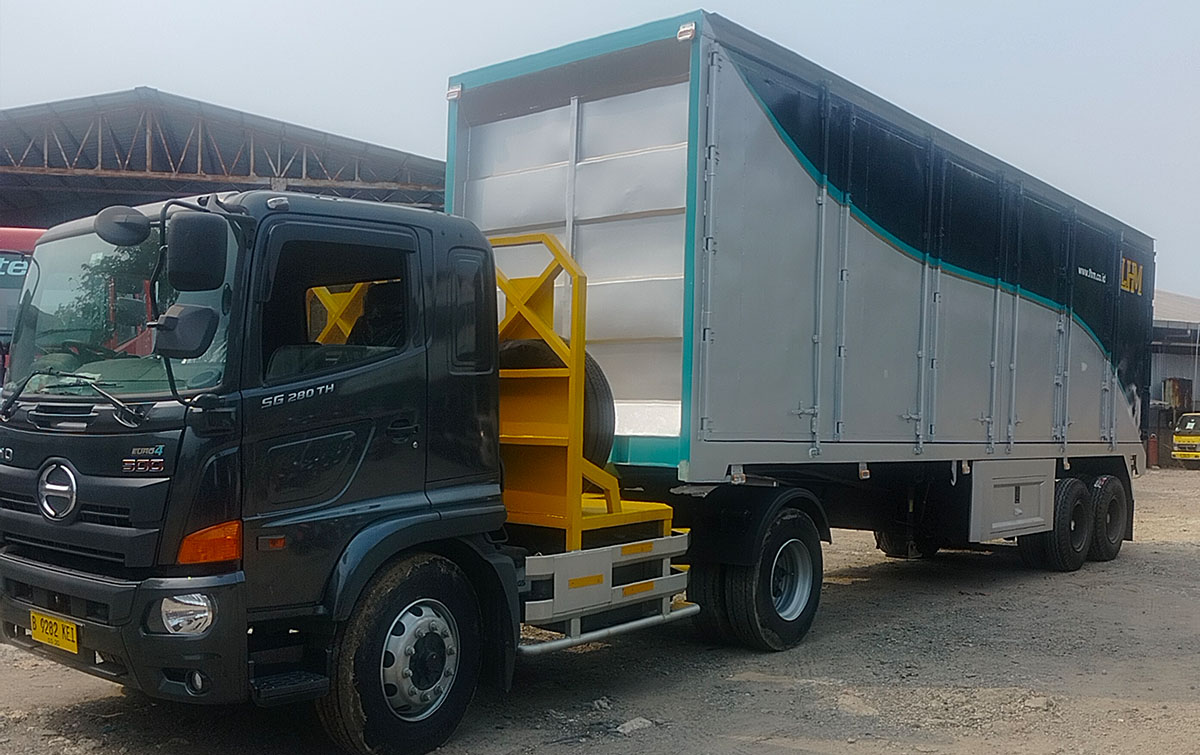
E. Cargo Bodies and Wing Boxes
In cargo bodies and wing boxes, steel plates are used to form floors, side panels, covers, and supporting components. Material selection should consider structural weight, cargo protection, panel stiffness, and operating environment.
Body panels do not necessarily require the same thickness as frames or load-bearing structural components. The design should distinguish between enclosure panels and structural elements that carry loads.
4. Why Can't Steel Plate Thickness Be Standardized for Every Unit?
Two vehicles with similar volumes or dimensions may still require different materials and plate thicknesses. For example, a dump truck transporting certain types of soil may have different requirements from a unit carrying rocks with higher abrasion potential.
The same applies to tanks. Two tanks with identical capacities may require different designs because their shapes, operating pressures, fluid types, and support configurations differ.
Several factors determine material type and thickness:
Type of Loading
Static loads, dynamic loads, impacts, vibration, and fluid pressure create different structural demands.
Type of Transported Material
Abrasive materials require wear resistance considerations. Certain fluids require material compatibility and corrosion resistance.
Design and Reinforcement System
Panel geometry, bend radius, stiffener spacing, joints, and frame configuration all influence structural performance.
Vehicle Weight and Chassis
Increasing plate thickness adds structural weight. This needs to be evaluated to ensure that the vehicle configuration remains within chassis and load distribution limits.
Fabrication Process
Each material has different cutting, forming, and welding characteristics. Fabrication procedures must follow the relevant material specifications.
5. How Do You Select the Right Steel Plate for a Truck Body?
Before selecting a steel grade and thickness, the unit requirements should be evaluated as a whole.
The following information should be prepared:
-
Vehicle or chassis type.
-
Truck body type and intended function.
-
Type of material or cargo being transported.
-
Required capacity and dimensions.
-
Vehicle operating conditions.
-
Abrasion or corrosion resistance requirements.
-
Target structural weight and vehicle capacity limits.
-
Material specifications and applicable technical standards.
Based on this information, the engineering team can evaluate the appropriate material, thickness, structural shape, and reinforcement system.
Steel plate selection in truck body manufacturing is not determined by thickness alone. Material grade, mechanical strength, abrasion resistance, corrosion resistance, structural design, and operating conditions all play important roles.
Mild steel is commonly used for general fabrication, high tensile steel for selected structural requirements, wear resistant steel for abrasive environments, stainless steel for applications requiring corrosion resistance, and galvanized steel for components requiring surface protection.
Different units, including dump trucks, water tanks, CPO tanks, vacuum trucks, cargo bodies, and wing boxes, have different material requirements. Therefore, steel type and thickness should be selected through engineering evaluation rather than simply copied from another vehicle.
At PT Sribaru Indah Sejahtera, we understand that material selection is an important part of truck body manufacturing and fabrication planning. We encourage customers to discuss their requirements early so that material specifications can be evaluated according to the vehicle's function, design, and operating conditions.
Planning to manufacture a dump truck, tank, cargo body, or another custom truck body?
Discuss your material requirements, steel plate types, thickness, and vehicle configuration with the PT Sribaru Indah Sejahtera team.
click : Chat with PT SIS on WhatsApp
Recent Posts